

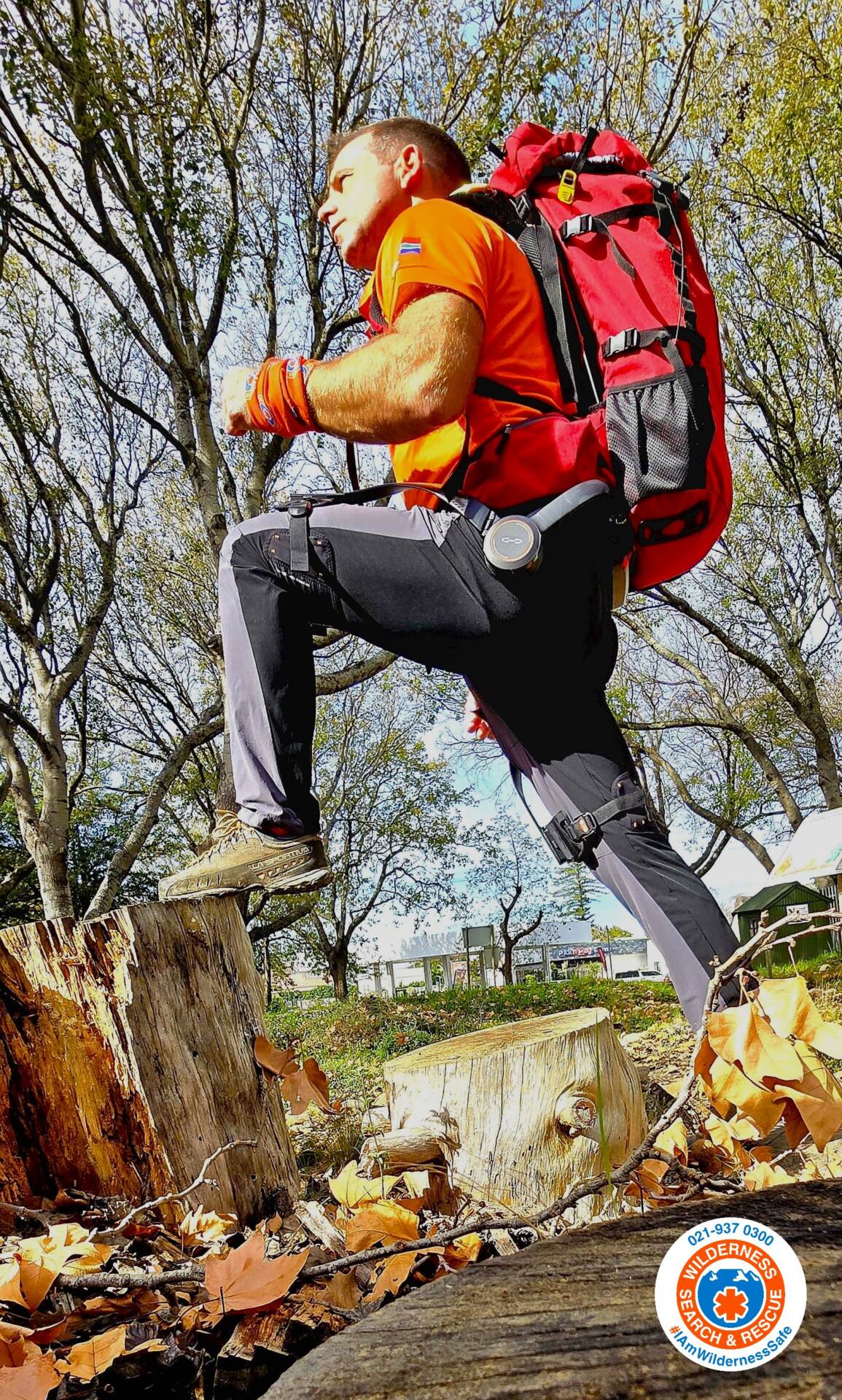
Cape Town, South Africa – Wilderness Search And Rescue (WSAR) is pleased to announce a collaboration with Hypershell as part of its ongoing commitment to exploring innovative solutions that support its ability to provide a world-class rescue service to the communities of the Western Cape.
As a volunteer-based rescue organisation operating in challenging mountain and wilderness environments, WSAR continually evaluates new technologies that have the potential to improve rescuer safety, efficiency and endurance during demanding operations.
The HyperShell exoskeleton is a lightweight, wearable mobility-assistance device designed to augment human movement using intelligent electric motors and motion-sensing technology. Worn around the waist and legs, the system is designed to provide additional power while walking and hiking, particularly on steep ascents and over long distances. According to HyperShell, the device can help reduce fatigue, improve endurance and assist users carrying heavy loads in demanding terrain.
Through this collaboration, HyperShell has invited WSAR to evaluate the technology in real-world mountain environments, allowing rescuers to assess its practical application during training exercises and operational activities.
“Mountain rescue is physically demanding,” said David Nel, spokesperson for Wilderness Search And Rescue. “Our volunteers often carry substantial loads over long distances, frequently in difficult weather and terrain. Technologies that have the potential to reduce fatigue and improve efficiency are worth exploring, and we’re grateful that HyperShell has chosen our teams to assist with evaluating this emerging technology.”
WSAR’s rescue teams regularly operate in remote and rugged environments where rescuers may spend hours hiking technical terrain while carrying specialised medical, communication and rope rescue equipment. As outdoor participation continues to grow across the Western Cape, the organisation remains committed to identifying opportunities that may enhance operational effectiveness while supporting the wellbeing of its volunteers.
“Innovation has always been part of mountain rescue,” Nel said. “We’re excited to put this technology through its paces and see whether it can provide meaningful benefits to rescuers operating in challenging terrain.”
While the exoskeleton’s advertised capabilities are promising, WSAR emphasises that the collaboration is focused on practical assessment and learning rather than endorsement.
“Every kilogram carried and every step taken matters during a rescue operation,” said Nel. “If technologies like this can help reduce fatigue and extend a rescuer’s effectiveness, they deserve careful evaluation.”
The Western Cape’s diverse mountain environments, varying weather conditions and demanding hiking routes provide an ideal testing ground for assessing how emerging technologies perform outside controlled conditions.
“Real-world rescue environments present challenges that are very different from controlled testing conditions,” Nel added. “We’re curious to see how the system performs on steep mountain trails, during extended deployments and while carrying the equipment our rescuers rely on. The evaluation process will help us understand both the opportunities and limitations of this type of technology in a rescue setting.”
“We’re grateful to HyperShell for entrusting our teams with this opportunity,” said Nel. “Partnerships that encourage innovation and knowledge-sharing help ensure that rescue organisations continue to evolve and remain ready to meet the challenges of the future.”
Curious to see what the future of mountain rescue might look like? Watch the video and let us know what you think.